
Can’t Make It Home? How to Send Condolences to a Filipino Wake
A relative, friend or former colleague has died in the Philippines, and you cannot make it to the wake.
For Filipinos living abroad, this can happen rather easily. The news arrives with little warning, flights are expensive, and getting leave from work at short notice is another matter entirely. OFWs in particular may simply have no realistic way of getting home in time.
So what do you send?
Funeral flowers are the obvious choice, though abuloy, food and Mass intentions are all common too. What makes sense depends largely on how close you are to the family and what they actually need.
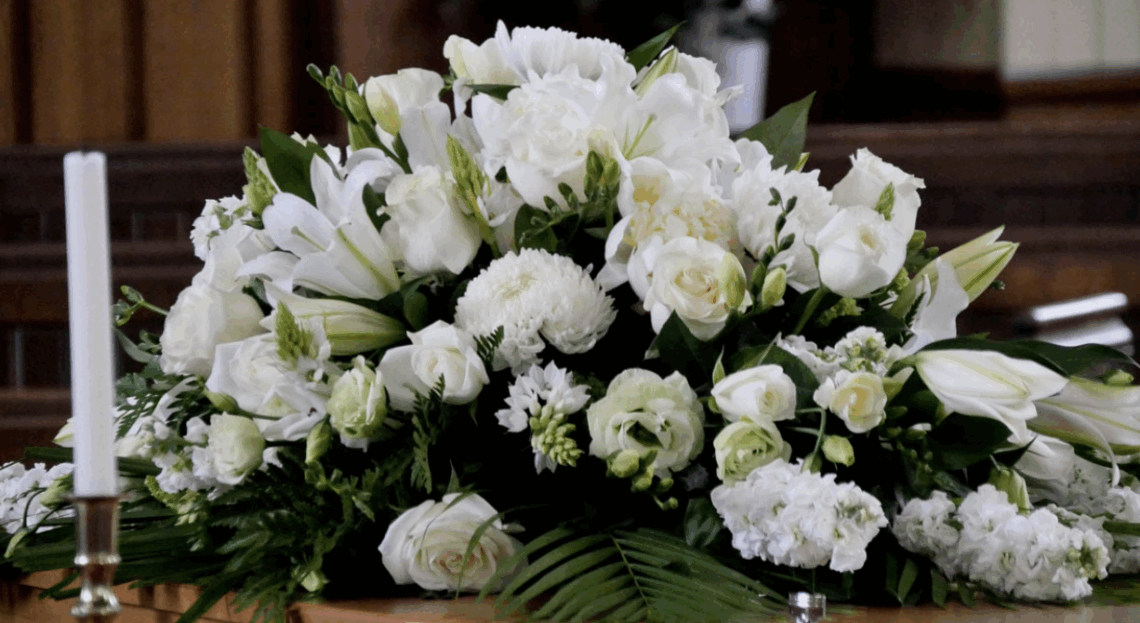
Sending funeral flowers
Funeral flowers work particularly well when distance makes attending impossible.
Standing arrangements and wreaths are the larger displays normally placed around the casket. Baskets are smaller and suit individuals or small groups. Casket sprays are generally arranged by the immediate family, so those are best left alone unless someone has specifically asked for one.
If the different arrangements are unfamiliar, this guide to the types of funeral flowers explains what each one is for.
White is the usual choice. Cream, pale pink and soft yellow are common as well. Bright red tends to be avoided unless the family has asked for it.
Before ordering anything, get the exact venue.
That means the memorial park or funeral home, the chapel name and, where applicable, the room number. Large memorial complexes can have several wakes taking place at the same time.
It is also worth checking the schedule. The family may be moving to a church or cemetery the following morning.
A very expensive wreath arriving after everyone has left is mostly an inconvenience with ribbons on it.
Abuloy from abroad
Abuloy is the cash contribution given to the bereaved family. It helps with funeral expenses and the cost of having people coming through the wake for several days.
If you are overseas, a relative or trusted friend can give it for you. Some families are perfectly comfortable receiving it electronically as well. Best to ask whoever is coordinating things.
As a rough idea:
- ₱200 to ₱500 for a coworker, neighbour or distant connection
- ₱500 to ₱1,000 for someone you know reasonably well
- ₱1,000 or more for close friends or extended family, assuming it is affordable
These amounts are only a steer. Abuloy is not an entrance fee.
Food can be more useful than expected
A wake can run for days. Visitors come in the afternoon, after work and late into the night.
Someone has to keep feeding them.
Pandesal, coffee, bottled water, biscuits, pancit or a tray of hot food will usually find a use.
When arranging food from overseas, check first. A family with six trays of pancit already sitting on the table probably does not need a seventh.
A better question is:
“Ano’ng kulang?”
What’s missing?
It might be coffee, ice, drinking water or something nobody thought to buy.
Mass cards and prayer intentions
For Catholic families, a Mass intention or Mass card can also be appropriate.
A parish can arrange for a Mass to be offered for the deceased. For relatives abroad, this can be a fairly simple way of taking part when getting home for the funeral is impossible.
Of course, this depends on the family. Filipino does not automatically mean Catholic.
What to say when you cannot be there
Keep the message fairly short.
“Nakikiramay ako.”
“Condolence sa inyo.”
“Nandito lang ako kung may kailangan kayo.”
If you are close to them, saying you wish you could be there is enough.
There is little need to provide a detailed account of your work schedule, flight prices or why your leave was refused. The family will probably understand the situation already.
And perhaps avoid trying to make the loss sound better than it is.
Everything happens for a reason.
At least he’s not suffering.
Be strong.
Usually well intended. Rarely necessary.
What if you are coming home later?
Missing the wake does not mean you have missed your only chance to visit.
You may be able to come home for the burial or see the family afterwards. In many Catholic Filipino families, observances continue with the pasiyam, the 40th day, the first anniversary and, in some households, babang luksa.
There is no need to arrive with something extravagant because you missed the first few days.
Visit. Sit with them. Bring abuloy if appropriate.
That will do.
One final thought. The first few days after a death tend to be busy. Messages arrive constantly. Flowers fill the chapel. Relatives call from abroad.
A few weeks later, things become much quieter.
That is often a better time to send another message.


You May Also Like

Lavender Oil and Sleep: Does It Help?

mWell, PH’s fastest-growing health app, announces National mWellness Day
